AMECEA Member Countries Unite to Strengthen Institutions against Human Trafficking
Religious leaders from across the Association of Member Episcopal Conferences in Eastern Africa (AMECEA) member countries have gathered in Addis Ababa this week to bolster their collective efforts against human trafficking and irregular migration.
Hosted by the Ethiopian Catholic Church, the regional workshop was held from July 21st to 25th, aims to integrate the fight against human trafficking more deeply into the pastoral agenda of member countries of the AMECEA.
The workshop began with an in-depth examination of the contextual realities within each conference and the broader regional perspective on human trafficking. Participants identified national and regional issues, reviewed existing interventions, celebrated successes, and acknowledged challenges, offering recommendations for the path forward.
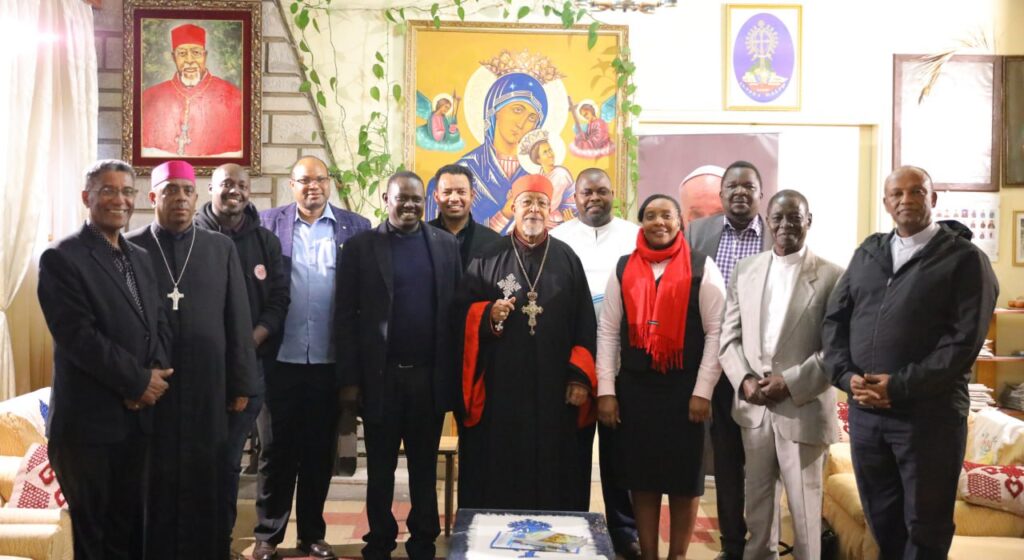
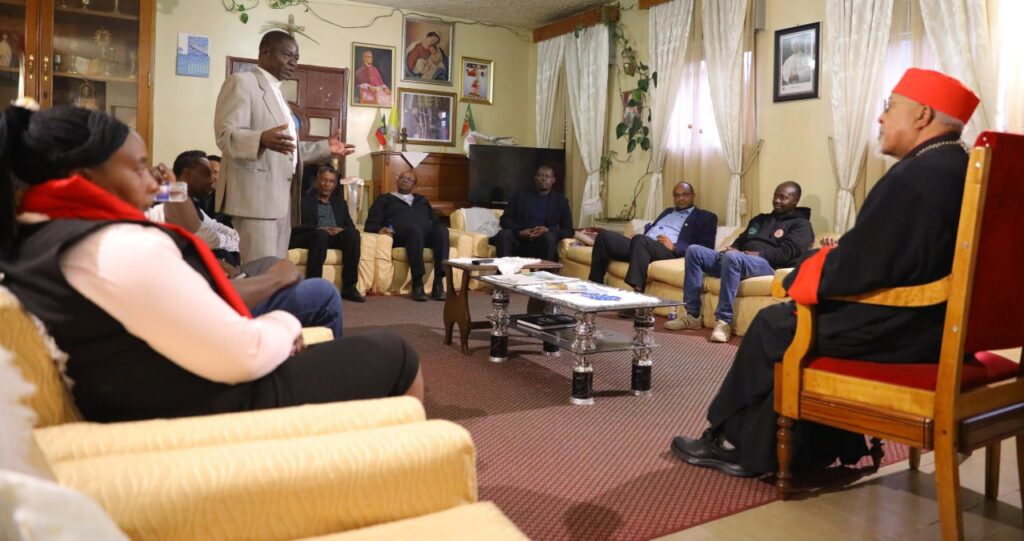
During their stay, the AMECEA team also held a courtesy meeting with His Eminence Cardinal Berhaneyesus, Archbishop of Addis Ababa and President of the Catholic Bishops Conference of Ethiopia, along with His Excellency Abune Tesfasellasie, Auxiliary Bishop of Addis Ababa, and Rev. Abba Ketema Asfaw, Secretary General, and their conference staff.
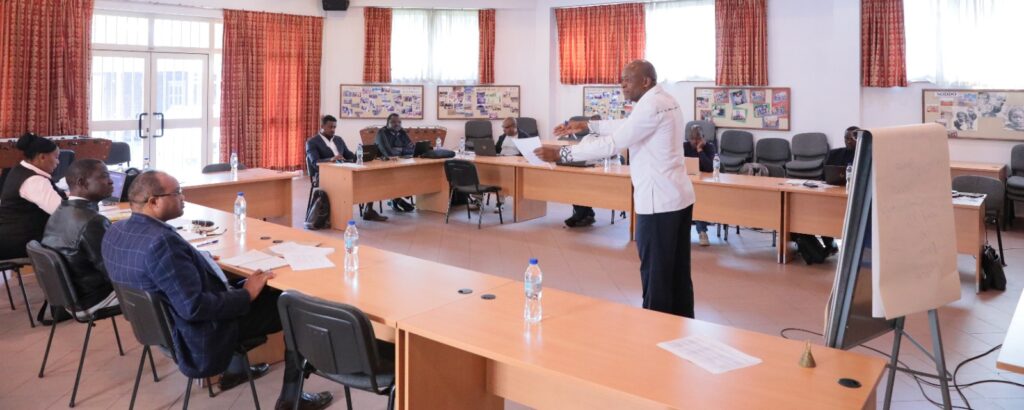
Fr. Paul, AMECEA Coordinator for Promotion of Integral Human Development, underscored the urgent nature of the crisis, stating, “Human trafficking is now a crisis, especially in the AMECEA region.” He emphasized the need to create awareness among bishops and church members about how this crisis impacts the region, highlighting that while many African youths are suffering. He further asserted that good governance and strong leadership in governments would significantly decrease the number of victims of trafficking. He also drew attention to the plight of those already abroad, noting they often face discrimination, depression, and racism.
To address this, he called for capacity building in providing pastoral services to refugees, including the appointment of chaplains for refugee centers and the establishment of migration desks within Bishops’ conferences. He stressed the importance of advocacy to be a voice for migrants, refugees, and those trafficked, and urged collaboration between the Church and organizations like the African Union (AU), IGAD, embassy consulates, East African legislative bodies, and other human rights organizations.
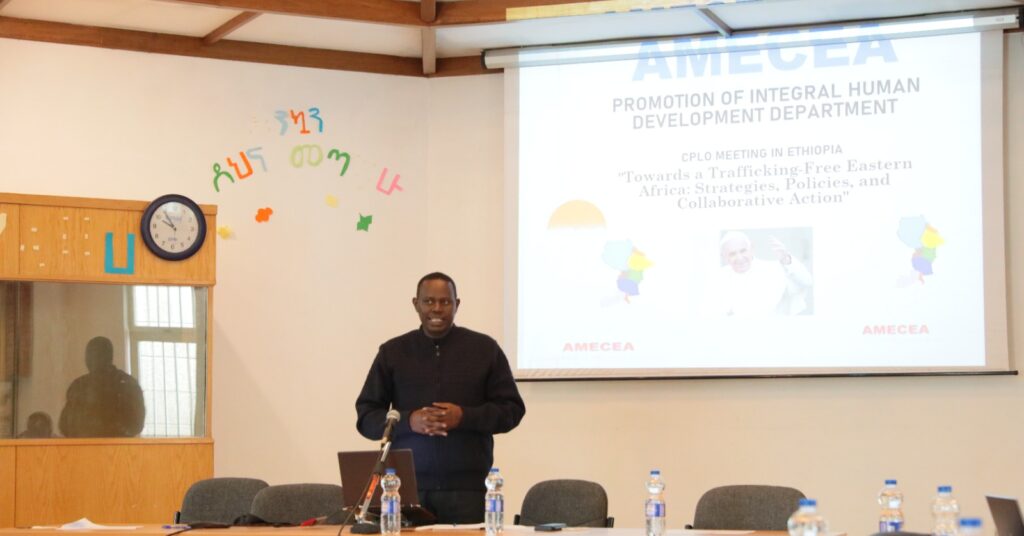
As a key outcome, Fr. Paul hopes the AMECEA Bishops will adopt human trafficking as a pastoral agenda, providing spiritual guidance and advocating for a dignified life for all migrants. A crucial action point from this meeting, he noted, is to inform member conferences about the number of migrants and relevant statistics from their respective countries.
Quoting the late Pope Francis, Fr. Paul reminded attendees that “human trafficking is a modern way of slavery and colonization.” He also echoed Pope Francis’s message, “Let us not fear refugees as a threat to the countries; these people have values, talents, and they bring talents as the guest who visited Abraham brought blessing to his house.”
Fr. Paul also connected the workshop’s theme to the upcoming Jubilee Year, the “Year of Hope”, noting that a Jubilee of migrants will take place in October. He emphasized that this theme would provide a vital opportunity to advocate for combating human trafficking. He conveyed the Holy Father’s wish that the Jubilee would offer hope to refugees, underscoring the belief that “we are all one human kind, so we must treat refugees in a dignified way and open our home, as Jesus Christ taught us, ‘I was hungry you gave me food, I was a prisoner you visited me'” (Matthew 25:35-36).
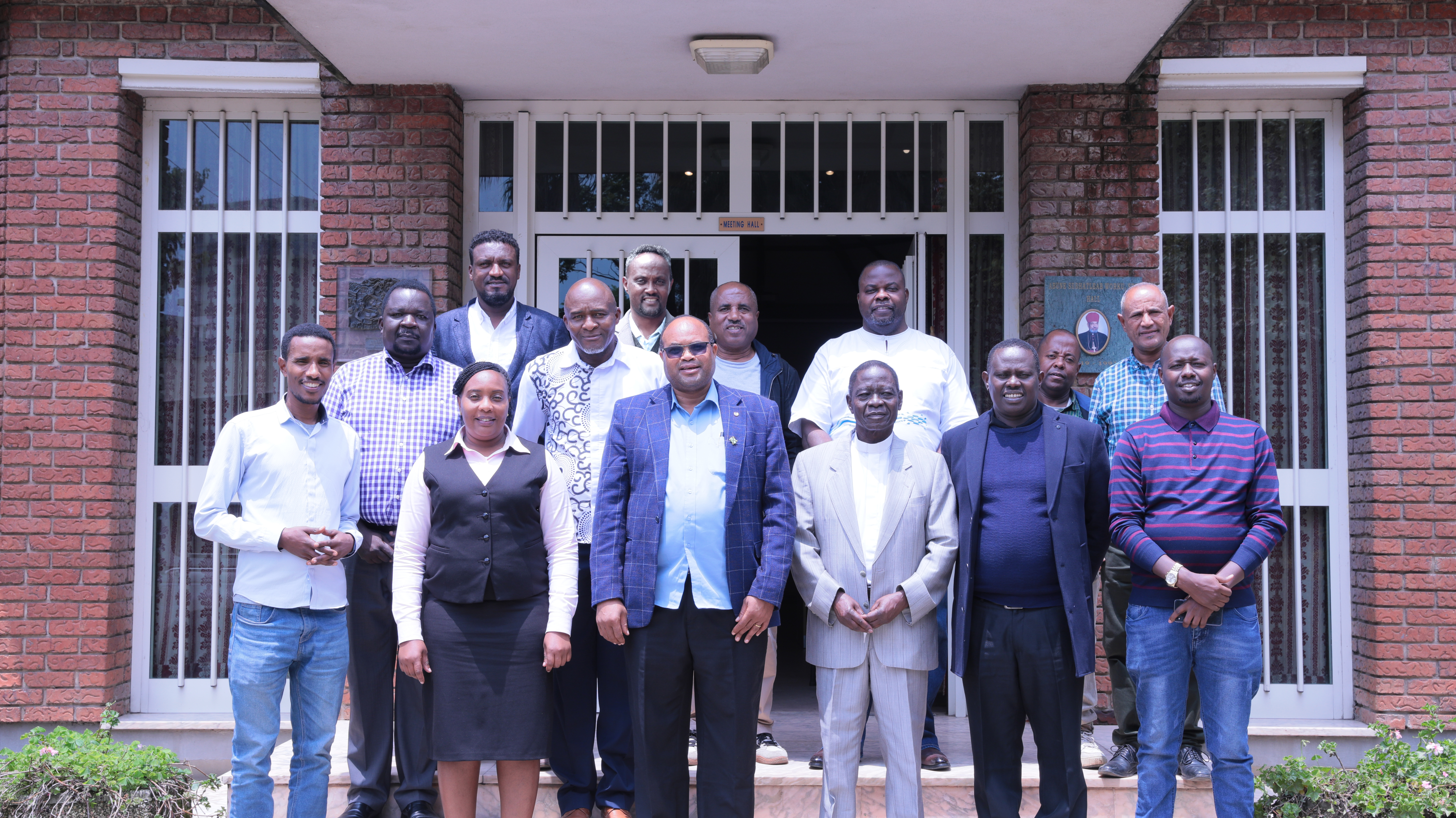
Discussions also covered programmatic engagements, policies, and frameworks at national, regional, continental, and global levels. A significant focus of the sessions has been addressing the current gaps and disjointed approaches that hinder effective action against human trafficking. Participants thoroughly discussed the root causes behind the increase in human trafficking and identified areas for improved collaboration and linkage.
Participants affirmed that human trafficking is a pressing reality that demands urgent attention, emphasizing the need for conferences to fully embrace this pastoral agenda. The vital role of spiritual solidarity and the Church’s capacity to offer hope to those affected were also highlighted.
Participants voiced a strong consensus on the urgent need for the Church to play a leading role in providing hope and spiritual solidarity for victims. They also emphasized the importance of regional collaboration and called for a restructuring of migration departments within church institutions to better respond to the evolving crisis.
“Human trafficking is a grim reality that must be addressed,” one participant stated. “Our conferences must fully embrace this as a pastoral priority, giving our people not only support but also hope through our unified action.”
The workshop culminated in several key resolutions, emphasizing a multi-faceted approach to combating human trafficking: a commitment to re-evaluate and refine current strategies; a plan to push the issue further down to the diocesan level, involving families and small Christian communities; a dedication to strengthening partnerships at every level, including with other peer conferences; a pledge to integrate advocacy efforts into all levels of church activity; an encouragement for joint initiatives and promotion of the activities of member conferences; and a plan to create comprehensive guidelines to address human trafficking and migration at a regional level.
The workshop marks a significant step in AMECEA’s broader vision of mobilizing the Church’s spiritual and institutional resources to safeguard human dignity across Eastern Africa.
“በነፃ የተቀበላችሁት በነፃ ስጡ”

አስተንትኖ፡ የሚስዮናዊ ደቀመዝሙርነት ራስን መቻልን፣ መተማመንን እና ልግስናን ይጠይቃል። የተላክነው ለጥቅም ሳይሆን የምስራቹን ቃል ለማወጅና ለመባረክ ነው።